Source: Christopher, Gutekunst, C., Liu, L., Rosenberger, T., & Kohler, B. A. (2023). Formative evaluation of Peace Spaces in a middle school: Teacher perceptions and student usage. Psychology in the Schools. https://doi.org/10.1002/pits.23045
LEARN Brief and Infographic Credits: Dr. Sherell Fuller, Dr. Jeannie Haubert
Overview:
This research provides a formative evaluation of Peace Spaces, including Peace Corners and Peace Rooms, as trauma-informed interventions in a middle school setting. Using a mixed-methods approach, the study combines qualitative teacher interviews and quantitative student usage data to assess the effectiveness of these spaces in promoting self-regulation and emotional well-being among students. Teachers reported positive changes in student behavior, classroom dynamics, and overall school environment, with fewer disciplinary referrals and improved teacher-student relationships. Students primarily used Peace Rooms to address peer-related stressors and mental health challenges, with activities like mindfulness exercises and talking to a trusted adult being the most utilized. However, challenges such as logistical issues, student misuse, and tension between academic expectations and trauma-informed care were noted.
Key Insights:
- Peace Spaces Promote Self-Regulation:
- Students use Peace Corners and Peace Rooms to manage stress, with peer-related and mental health challenges being the top reasons for utilization. Activities like mindfulness and talking to a trusted adult are highly effective.
- Positive Impact on School Environment:
- Teachers reported fewer disciplinary referrals, improved classroom dynamics, and stronger teacher-student relationships, indicating that Peace Spaces contribute to a healthier school climate.
- Implementation Requires Systemic Support:
- Effective use of Peace Spaces depends on staff training, clear protocols, and dedicated personnel, highlighting the importance of a trauma-informed, school-wide approach.
Action Steps:
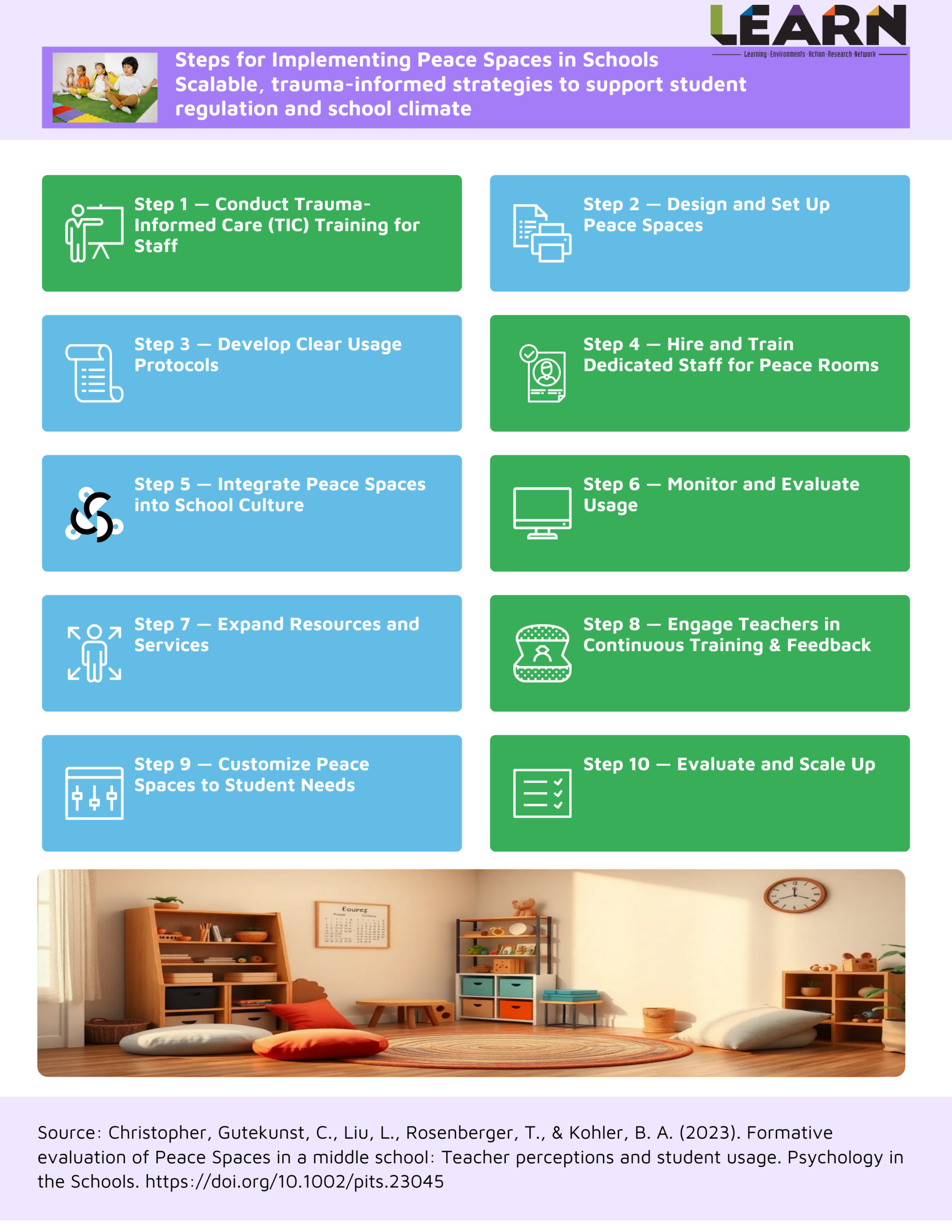
- Conduct Trauma-Informed Care (TIC) Training for Staff:
- Provide professional development on trauma-informed practices, including the effects of trauma on students’ behavior and learning.
- Train staff on the philosophy and purpose of Peace Spaces, emphasizing their role in self-regulation rather than punitive measures.
- Design and Set Up Peace Spaces:
- Create Peace Corners in classrooms: These should be private, calming spaces equipped with tools like “calm down” jars, mindfulness activities, and sensory items.
- Establish Peace Rooms: These should be staffed by trained personnel (not necessarily licensed mental health professionals) who can offer mindfulness exercises, breathing techniques, and emotional support.
- Develop Clear Usage Protocols:
- Establish guidelines for when and how students can use Peace Spaces, ensuring they are accessible and not perceived as punitive.
- Communicate to teachers that frequent use of Peace Spaces may indicate a need for additional support rather than misuse.
- Hire and Train Dedicated Staff for Peace Rooms:
- Employ staff trained in trauma-informed practices, mindfulness, and emotional regulation techniques to manage Peace Rooms effectively.
- Ensure staff can build trust and positive relationships with students, as this is key to the success of Peace Rooms.
- Integrate Peace Spaces into School Culture:
- Normalize the use of Peace Spaces by promoting them as tools for self-regulation and emotional well-being.
- Encourage peer modeling to reduce stigma and foster a supportive environment.
- Monitor and Evaluate Usage:
- Collect data on how students use Peace Spaces, including reasons for usage and activities performed.
- Track outcomes such as changes in disciplinary referrals, classroom behavior, and overall school climate.
- Expand Resources and Services:
- Consider adding more Peace Rooms or spaces as demand increases.
- Provide additional mental health services, such as counseling, to complement Peace Spaces.
- Engage Teachers in Continuous Training and Feedback:
- Offer ongoing training to address concerns and improve implementation fidelity.
- Create opportunities for teachers to visit Peace Rooms and learn more about their function.
- Customize Peace Spaces to Student Needs:
- Tailor Peace Spaces to the specific needs of the student population, considering factors like age, developmental level, and cultural background.
- Evaluate and Scale Up: o Use data and feedback to refine the implementation process.
- Consider expanding Peace Spaces to other schools within the district.
By following these steps, districts can create actionable frameworks to implement Peace Spaces effectively, fostering a trauma-informed school environment that supports both students and staff.